

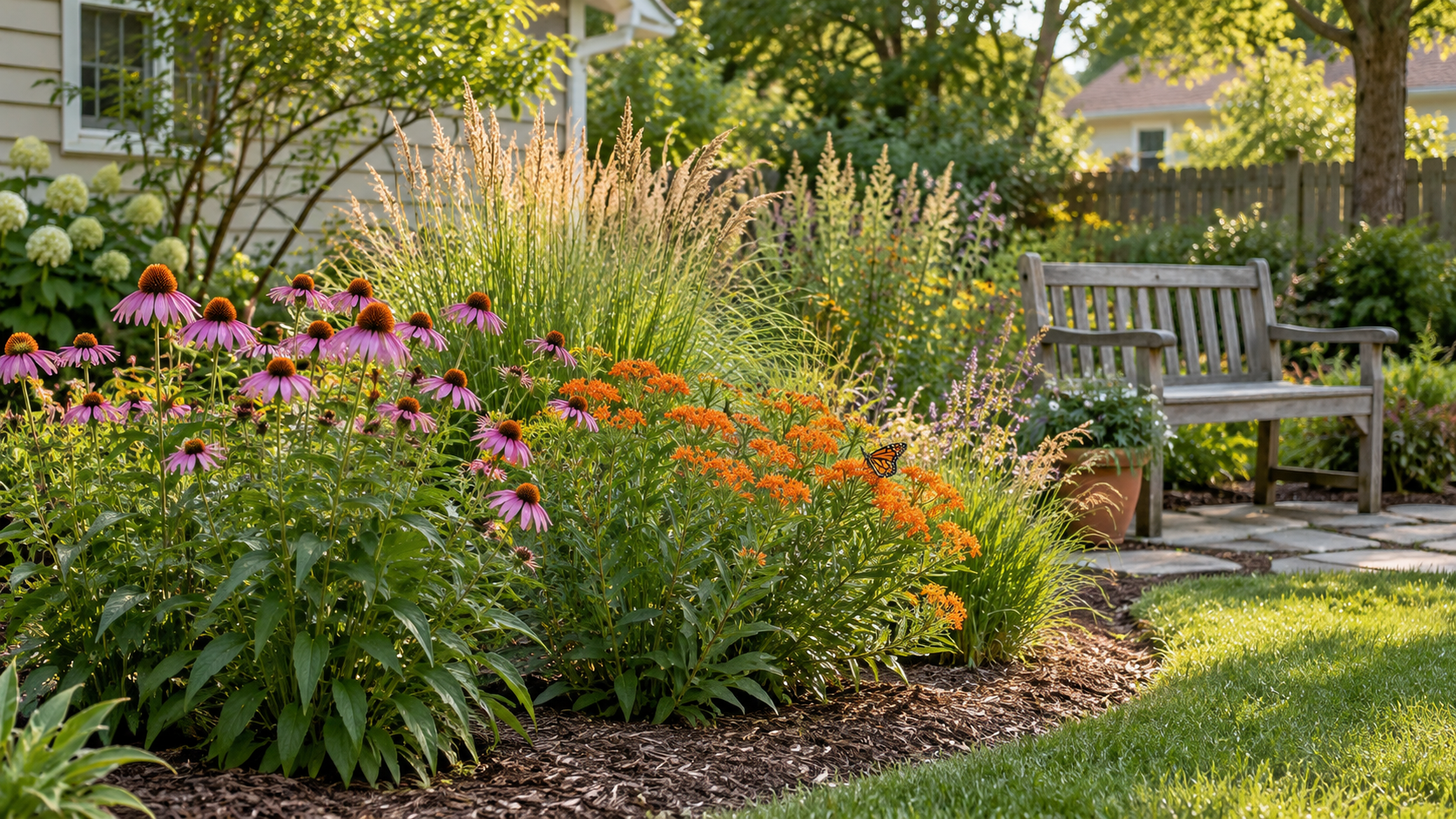

A Little Prairie for a Smaller Yard
A modest garden can carry memory, welcome wildlife and become a new field of curiosity—provided its planting belongs to the place where we live.
THE PACIFIC44 JOURNAL · THE JOURNEY TO 60 AND BEYOND
By The Pacific44 Journal · Editorial Features
A modest garden can carry memory, welcome wildlife and become a new field of curiosity—provided its planting belongs to the place where we live.
A smaller yard can look like a limitation until we decide what we want it to hold. It might need room for a chair, a view from the kitchen and enough planting to make the seasons visible. That can be a substantial garden even when the ground is modest.
For readers with Midwest roots, a prairie-inspired planting can also carry memory: grasses moving in the wind, flowers returning at different times and the feeling of land doing something beyond being kept neatly short.
The Journey to 60 and Beyond gives that interest another form. A garden can be a project we continue learning from, shaped to the home and the amount of work we want to do now.
Begin with the ground you actually have
Iowa State University Extension gives an important starting point: a plant's native status does not automatically make it suitable for every garden. Light, soil, moisture and the altered conditions of a residential landscape still matter.
The advice protects a good idea from becoming an unsuitable planting. A plant associated with open prairie may behave differently in fertile soil or a frequently irrigated bed. Extension notes that some species grow taller or spread more strongly under managed conditions.
Observe the site before choosing plants. Where does the sun fall, where does water collect and how will people move through the space? Ask a local extension service or qualified nursery to help match the planting to those conditions.
A small garden is more forgiving when its ambition has a clear boundary. Begin with a bed you can reach and maintain, leaving paths and sitting space that support its everyday use.
Prairie is an influence, not a universal plant list
A prairie-inspired garden can draw on seasonal change, varied texture and the relationship between grasses and flowering plants. Those qualities can guide the design even when the exact species must change with the region.
An Iowa plant list belongs to Iowa's conditions and native ranges. It should not be transplanted wholesale to southern Nevada or another western climate. A memory of home can inform the feeling of a garden while local guidance determines what grows there.
For Henderson-area readers, the Southern Nevada Water Authority offers desert-adapted plant information and landscape-planning resources. Those provide a more appropriate starting point for choosing vegetation and water arrangements suited to the actual site.
That distinction is especially relevant to Pacific44's Midwest and western perspective. We can carry an affection for a landscape without trying to make every new home reproduce it literally.
Give the garden more than one season
A planting can be interesting through successive stages rather than only during a short flowering peak. Ask about mature size, bloom periods, foliage and what a plant looks like after the flowers have finished.
Arrange the bed so those changes can be noticed from the house or a seat. A garden that is visible during an ordinary morning may become part of daily life more readily than one hidden at the far edge of a property.
Leave enough room for the mature plants, not just the size of the nursery pots. A small bed can become crowded quickly if each choice is made as though the next one will never grow.
Keep a simple record of what was planted and where. Notes about timing and behavior can make the second year more informed than the first. The notebook becomes useful when a label disappears or something needs to be divided, moved or replaced.
Think about habitat with specific questions
Iowa DNR's backyard-habitat guidance connects gardens with food, shelter and places for wildlife. That invites a broader view of the yard: which living things might use it, and what would make the space useful to them?
Use local information when choosing habitat plants. The relationship between a species and wildlife is more specific than a general label such as pollinator-friendly. Ask what is appropriate in your area and how it fits with the rest of the garden.
Observe what happens rather than expecting an immediate result. A visiting insect, a bird using cover or the timing of an unfamiliar flower can become an introduction to another subject.
A habitat garden also remains a home landscape. Consider neighbors, visibility, paths and household use. A planting can be ecologically interesting and thoughtfully composed; those aims need not compete.
Match the project to the work you want
A native or naturalistic appearance does not eliminate maintenance. Weeding, establishment, watering and managing plants that spread can still be part of the work. Extension's examples are a useful reminder to plan for actual behavior.
Decide how much time you want to give the garden during a normal week. Start with a scale you can manage comfortably, and expand after learning from it. A smaller successful bed can be more rewarding than a large project that becomes a burden.
Make access part of the design. Paths, clear edges and reachable planting areas can help the work remain enjoyable. If particular physical needs matter, discuss them with an appropriately qualified designer rather than assuming a general garden layout will solve them.
Ask how establishment care changes after the plants mature. A maintenance plan should distinguish the first season from later years. The amount and pattern of watering should come from guidance suitable to the site and species.
Let the yard support the rest of life
A garden is not only somewhere to work. Give it a place to sit, or a view that can be enjoyed without stepping outside. The planting should earn its place during an ordinary evening as well as during the hours spent caring for it.
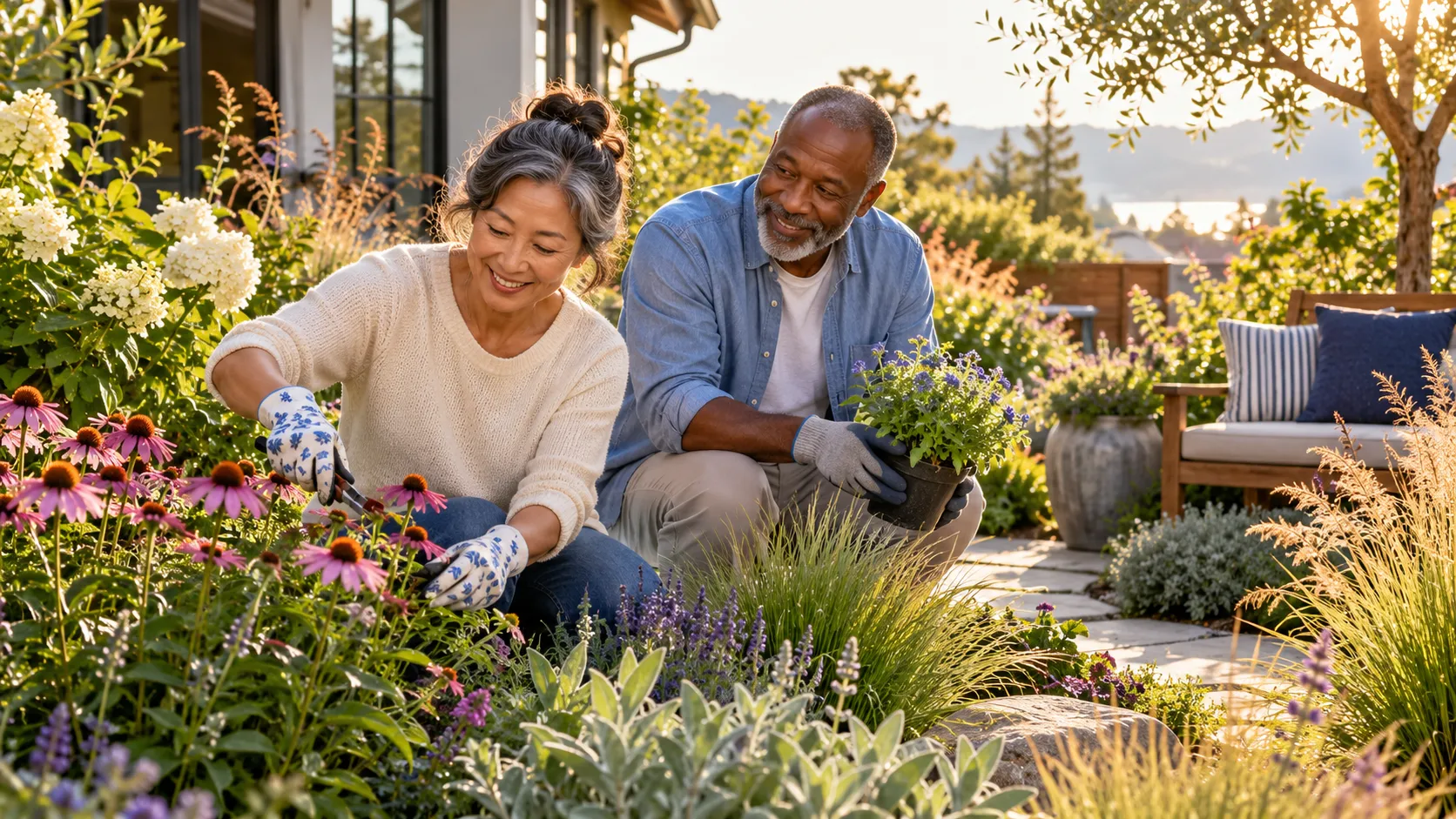
For a couple, the project can accommodate different interests. One person may enjoy planning or keeping records, while another prefers observing from a chair. Both can be part of a shared space.
A smaller home does not need an elaborate landscape to feel connected to the seasons. A carefully chosen planting, a comfortable seat and room for a few visitors may do more for daily life than a much larger ornamental display.
If the home is rented or subject to association rules, check permission and applicable requirements before making permanent changes. Containers or a modest permitted bed may offer a better starting point than a major redesign.
A small place to keep learning
The appeal of this garden is the continuing conversation with a piece of ground. Each season supplies information: what succeeded, what grew differently than expected and what you want to notice next.
A prairie influence can carry an affection for the Midwest. A western planting can express care for a new place. The garden becomes personal through how those interests are adapted, rather than through copying a photograph exactly.
For the Journey to 60 and Beyond, that is a worthwhile kind of project. It can be modest, observant and capable of changing as we do.
Choose the plants for the place. Give yourself somewhere to sit. Let a smaller yard become enough ground for another interest to grow.
Sources & planning
Iowa State native-plant guidance · Iowa backyard habitat · SNWA plant selection · SNWA landscape planning
Researched Pacific44 magazine feature; no firsthand visit, interview or product review is implied. The opening image is an AI-generated editorial illustration, not a photograph of the named business or destination. Information checked October 12, 2026; confirm current arrangements directly.
Image
Gallery.


Join the Journey!
Stories, places, music, ideas & inspiration for the journey to 60 and beyond — delivered from Pacific44.

Explore
Related posts.

Follow the
Journey.
@pacific44_lifestyle