

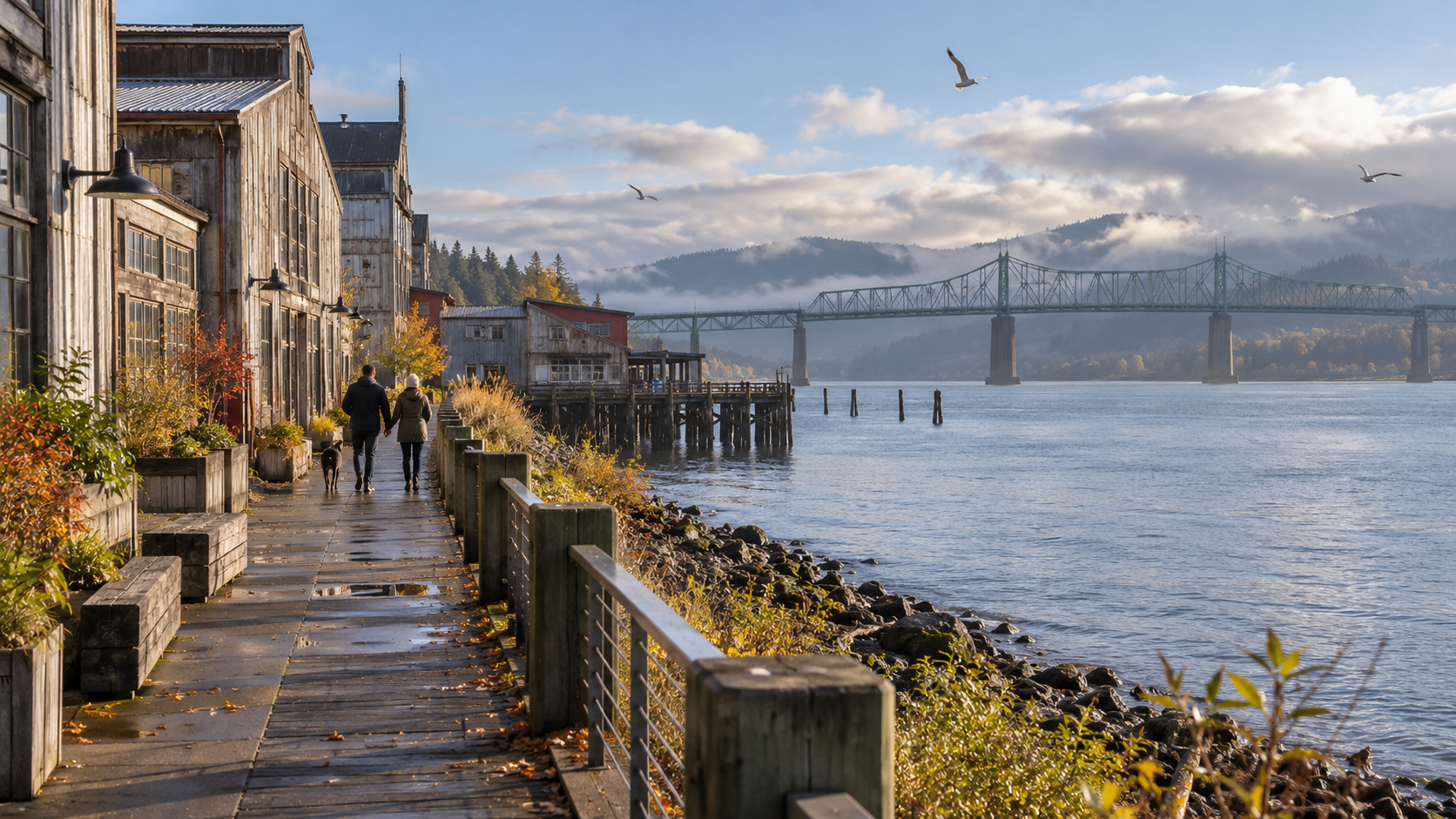

Astoria: A Town Best Seen on Foot
At the Columbia's edge, a waterfront walk opens a fuller Oregon journey through maritime history, working landscapes and the pleasures of a town-sized visit.
THE PACIFIC44 JOURNAL · THE JOURNEY TO 60 AND BEYOND
By The Pacific44 Journal · Editorial Features
At the Columbia's edge, a waterfront walk opens a fuller Oregon journey through maritime history, working landscapes and the pleasures of a town-sized visit.
A waterfront can be beautiful without telling the visitor much. Astoria's invites questions. The river, ships, tracks and buildings suggest work as well as scenery. A walk can become a way to understand how a town belongs to a much larger waterway.
At the Columbia River's edge in northwestern Oregon, Astoria offers a coastal-region journey with a different character from a beach holiday. Its appeal lies in the relationship between the town and the river, and in the history available behind the view.
For Pacific44 readers, it is a place worth giving an overnight and a good pair of walking shoes. The Journey to 60 and Beyond leaves room for trips where a museum, a repeated walk and an ordinary meal can be the main events.
Let the Riverwalk give the town a shape
The city's current Riverwalk description lists a 6.4-mile route along Astoria's north side, from the port area toward Lagoon Road. It passes through urban, industrial and natural settings, with largely flat paved surfaces and sections on wooden railroad trestles.
That variety is central to the experience. A waterfront walk is more revealing when it includes different uses of the river's edge. A working area can be as interesting as a polished viewpoint, especially when you begin asking what the buildings and infrastructure support.
You do not have to complete the whole distance. Choose a comfortable segment, identify where to pause and know how you will return. A short walk with time to observe can be more rewarding than a long one spent watching the mileage.
The city lists benches, interpretive features and connections with downtown. Read the current route information and allow for surfaces, weather and local work. A general description of a flat route does not establish that every segment suits every visitor.
The river deserves more than a photograph
A museum gives the outdoor view another dimension. Columbia River Maritime Museum sits at 1792 Marine Drive and describes an experience that connects the river with the human work and decisions around it.
Visit with a particular question in mind. How do people navigate and work on this waterway? What equipment and skills make that possible? The exhibits can help turn a distant ship from an object in a photograph into part of a system you understand a little better.
The museum has published information about a series of projects spanning 2024–2026. Check current exhibits, access and visiting arrangements so the outing reflects what is open now. Development work can make an institution's current experience different from an older review.
Give the visit enough time to absorb one subject well. A museum need not be completed as though it were an inventory. The most memorable result may be an answer to a question you had while looking at the river that morning.
A railway trace along the waterfront
The Riverwalk follows part of the Astoria and Columbia River Railroad corridor, according to the National Park Service. A historic trolley operates along portions of the waterfront, adding another layer to the town's relationship with transport.
For travelers who enjoy rail history, that is an appealing companion to the walk. Confirm operating dates, stops and current arrangements with the trolley's visitor information. A seasonal heritage service should not be treated as guaranteed transport at any hour.
The railway trace also invites observation even when no trolley is running. Tracks and trestles help explain how goods and people moved through the waterfront. The route's present recreational use belongs to a longer story of practical infrastructure.
A first visit might combine a walk with a trolley outing if the schedule suits. Keep the return plan clear, particularly if either traveler prefers a shorter distance on foot. The enjoyment lies in the town, not in proving how far you can walk.
Let the neighborhoods have an afternoon
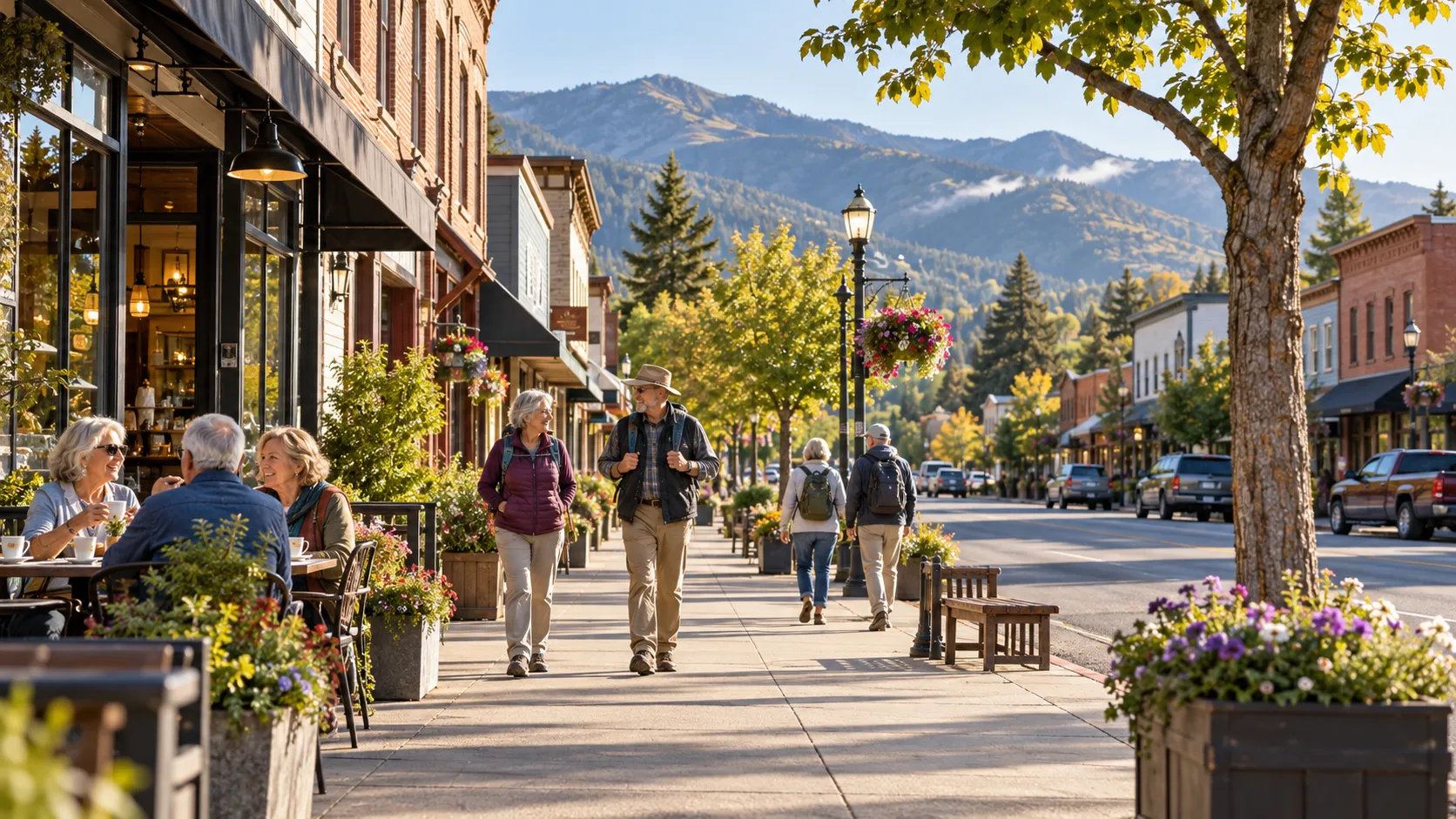
A waterfront can become the entire picture if the traveler never leaves it. Give the town center some time. Browse a shop, find a café and notice how streets and businesses connect to the river.
Choose one meal deliberately, then leave space around it. Ask about current menus and hours rather than assuming every place mentioned in an older itinerary still operates the same way. A lunch can anchor the day without taking it over.
Astoria's hills also matter when choosing a route or hotel. A lodging address described as central may involve a different walk from one directly on the waterfront. Read the location with terrain and luggage in mind.
For a couple with different interests, the town-sized scale can make a flexible visit possible. One may want more museum time; another may prefer browsing or a quieter walk. Agree on a place to meet and let the day accommodate both.
Consider an overnight before adding another destination
An afternoon arrival followed by a full next day is a useful way to imagine the visit. Walk a waterfront segment, give the maritime museum a substantial block of time and let a meal or town browse fill the remaining hours. This is an editorial suggestion, not a tested itinerary.
The overnight gives the river more than one appearance. Morning, changing weather and the light later in the day can reveal different qualities. Returning to the same place can make it familiar in a way that a single stop cannot.
Choose accommodation for how you want to use the town. Confirm parking, access, stairs or lift arrangements, and what reaching breakfast or the waterfront will involve. A beautiful room is more enjoyable when its location supports the trip.
If you plan a wider Oregon-coast journey, avoid treating Astoria only as the first name on a long list. Give it enough time before moving on. A slower route with fewer overnight changes can leave clearer memories.
A town approached with attention
A researched travel feature cannot predict the weather, the meal or the conversation a reader will have. What it can offer is a way to look. Astoria rewards the traveler who connects the walk to the museum and the view to the work behind it.
The maritime setting can also make a familiar interest more substantial. Someone who has always enjoyed boats or railways may find questions they have never asked. Someone accompanying them can enjoy the streets, water and change of pace without becoming an enthusiast.
Bring a small notebook if you like to remember details. Record the name of a ship, an exhibit or the part of the walk you would return to. Curiosity becomes easier to continue when it has something specific to hold onto.
The Journey to 60 and Beyond includes destinations that ask for neither a grand budget nor a demanding itinerary. Astoria offers a river, a town and enough history to make an unhurried visit feel full.
Begin with a walk. Let the questions that arise along it decide what you explore next.
Sources & planning
City Riverwalk information · NPS Riverwalk history · Columbia River Maritime Museum · Museum history and developments · Historic trolley visitor information
Researched Pacific44 magazine feature; no firsthand visit, interview or product review is implied. The opening image is an AI-generated editorial illustration, not a photograph of the named business or destination. Information checked October 12, 2026; confirm current arrangements directly.
Image
Gallery.


Join the Journey!
Stories, places, music, ideas & inspiration for the journey to 60 and beyond — delivered from Pacific44.

Explore
Related posts.

Follow the
Journey.
@pacific44_lifestyle