



The Pacific Coast, One Train Window at a Time
Rail travel turns the distance between western destinations into part of the holiday, from a California afternoon to an overnight journey north.
THE PACIFIC44 JOURNAL · THE JOURNEY TO 60 AND BEYOND
By The Pacific44 Journal · Editorial Features
Rail travel turns the distance between western destinations into part of the holiday, from a California afternoon to an overnight journey north.
Planning a trip can make the distance between places feel like a problem. We compare flights, calculate traffic and wonder how much of a day will disappear before arrival. A train offers another possibility: some of that time can belong to the experience itself.
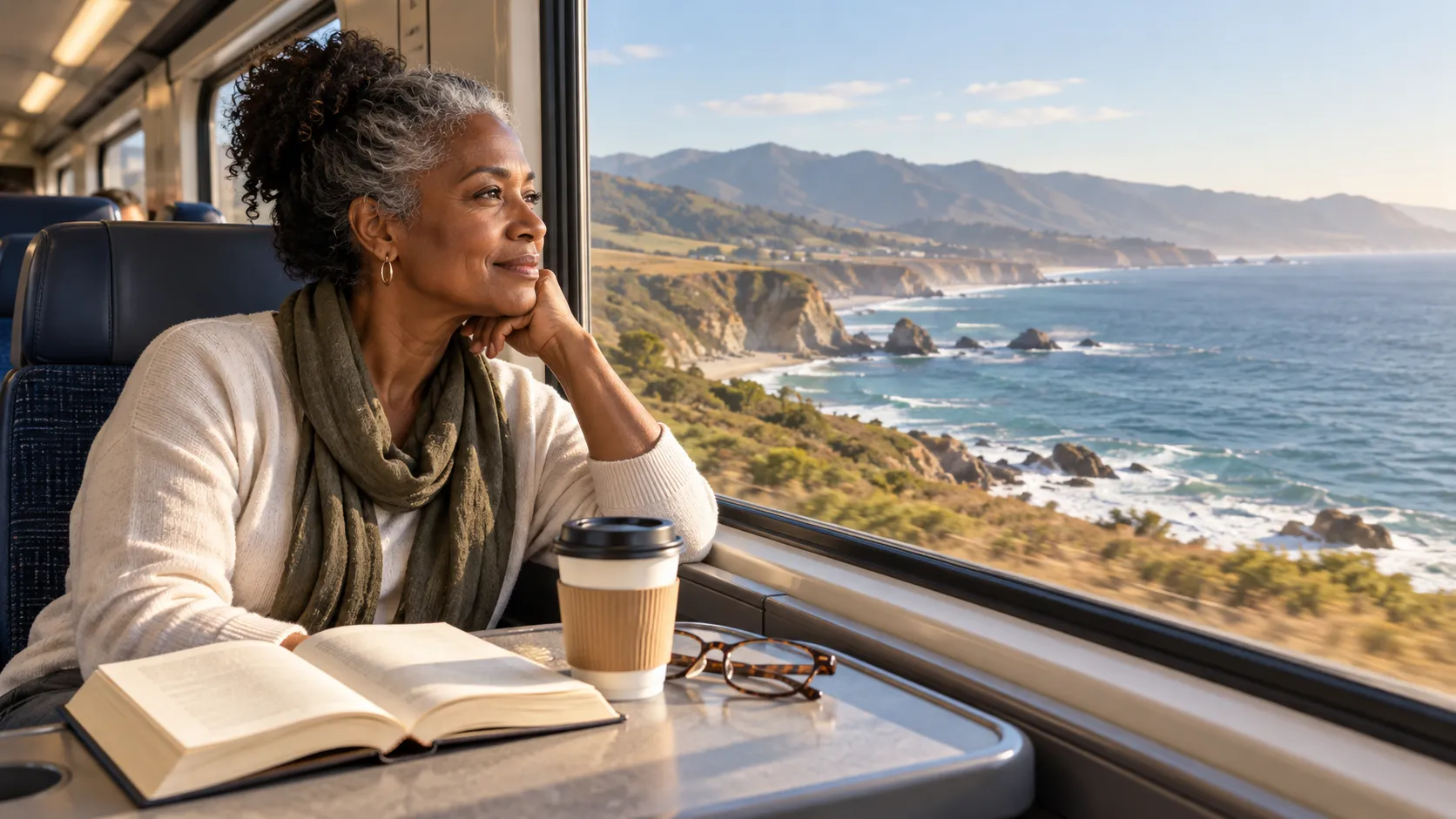
The West Coast gives the idea substance. Cities, agricultural valleys, mountain country and stretches of shoreline become parts of a journey seen from a seat you can remain in as the landscape changes. The attraction is the chance to travel with attention.
For the Journey to 60 and Beyond, that can be a meaningful change of pace. A holiday need not reproduce the urgency of a workweek. A railway route can make room for reading, conversation and reaching a city without having driven every mile.
Three routes, three kinds of experience
The Coast Starlight links Los Angeles and Seattle through California, Oregon and Washington, including Portland along the way. Investigate this service when the train itself is a substantial part of the trip, especially if an overnight journey interests you.
The Pacific Surfliner serves Southern California between San Diego and San Luis Obispo. It suits a shorter experiment: a journey to Santa Barbara, a few nights away or one rail segment that replaces a freeway drive. Its coastal identity is not a promise of continuous ocean views. Cities and inland landscapes belong to the route as well.
Amtrak Cascades serves the Northwest corridor between Eugene and Vancouver, British Columbia, with Portland and Seattle among its principal stops. Individual departures cover different portions of that corridor. Read the actual itinerary instead of assuming each train travels the entire route.
These are separate services with their own tickets and operating patterns. A trip using all three needs careful assembly. Connections, overnight stops and border requirements deserve planning; a line on a map does not guarantee a seamless transfer.
Let the scenery remain a discovery
Promotional photographs show rail travel's spectacular moments. A worthwhile journey also includes quieter scenes: a working neighborhood, fields in long blocks, an unfamiliar station or the backs of buildings rarely seen from the highway.
A train offers a view of how the West works as well as how it looks on a postcard. Ports and farms belong in the same story as resort towns. Passing through a city reveals that the destination extends beyond its most photographed streets.
If a particular stretch matters to you, consider direction and daylight when choosing a departure. Daylight changes with the season, delays can change what is visible and a seat cannot guarantee a brochure's photograph. Ask about interesting sections and leave room for unexpected ones.
A simple route map can make the view more legible. Recognizing a river or mountain range gives the landscape a name. It also gives arrival a context: you have some sense of the country around the place you will explore.
Choose accommodation for the people using it
For an overnight journey, research sleeping arrangements before committing. A roomette and a bedroom are different choices. Confirm space, berth configuration and bathroom access for the train and category being booked; diagrams are often more useful than a wide-angle interior photograph.
Consider how the room changes from daytime seating to beds. Is either traveler comfortable reaching an upper berth? Anyone needing an accessible arrangement should discuss the precise requirements with Amtrak. The right accommodation solves practical needs rather than simply sounding luxurious.
Coach may suit a shorter daylight journey or travelers comfortable with its overnight arrangement. Business Class, where offered, varies by service. Decide what problem an upgrade addresses: space, reservation arrangements or another specific benefit.
Check meal service and inclusions for the route and ticket. A moving train has less flexibility than a town full of restaurants. Know what is available and bring permitted snacks suited to your needs. For a first experiment, a manageable daytime journey can teach you how rail travel feels before you commit to several nights.
Let the stops have an overnight
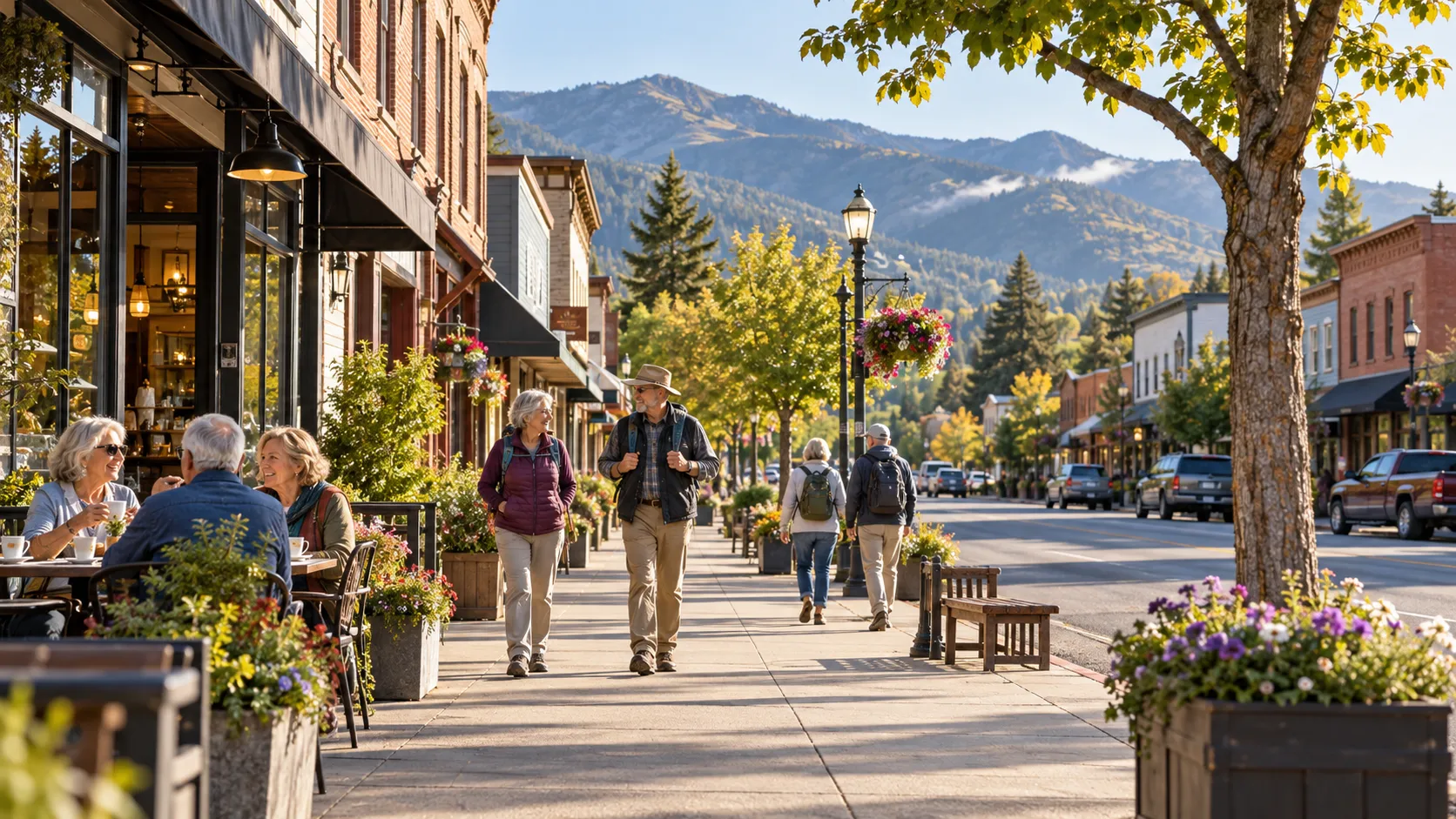
A rail trip grows richer when the towns along it have time to introduce themselves. Choose one or two places where you want to wake up. A bookstore, museum, garden or neighborhood walk gives arrival a purpose beyond checking off a station name.
Pacific44's Portland profiles of Music Millennium, Third Eye Books and Upper Left Roasters suggest one approach: discover a city through independent places that contribute to its character. An interest in music or coffee becomes a reason to step beyond the most obvious sightseeing circuit.
Confirm station-to-hotel transportation. A central station is not automatically convenient to your chosen lodging, especially with bags or after dark. Arrange storage where possible so the first walk feels like the beginning of the visit.
Give departure morning breathing room. Breakfast and a comfortable transfer are more satisfying than worrying about a tight connection. Fewer transitions can make a journey feel more generous, even without a more expensive room.
A considered first California trip
A Southern California traveler could begin with a Surfliner journey to Santa Barbara, adding an overnight and selecting departures that leave useful time in town. San Luis Obispo offers another possibility. These are planning ideas, subject to the timetable and service on your dates.
The advisory check matters. On October 12, 2026, the Surfliner page lists planned interruptions on October 25 and a corridor-wide rail closure on November 7–8. It also states that checked baggage service is suspended. Read the current notice before purchasing; alternatives may involve buses.
Choose luggage you can manage at stations and aboard the train. Confirm allowances and assistance arrangements. Traveling lighter can distinguish a pleasant transfer from one that consumes the afternoon.
For readers leaving Henderson, the adventure starts with reaching an appropriate station elsewhere. Do not assume a direct Amtrak rail departure from Las Vegas. Include the positioning journey in both the budget and calendar, with time for possible delays.
Time that belongs to the holiday
Bring a book you want to read. Save music for part of the trip, then spend another part looking and listening. Traveling together does not require filling every hour with conversation; a companionable silence can be part of the pleasure.
Less scenic stretches, delays and shared space are part of the experience. A thoughtful plan accommodates them rather than treating the railway as a flawless luxury promise. Keep arrival-day commitments flexible when possible.
What rail travel offers is a different relationship with distance. You can watch places connect and arrive with a sense of the land crossed. A city appears as part of a region rather than only at the end of an airport corridor.
The Journey to 60 and Beyond includes deciding how we want to spend time. Giving the window, the route and the towns along it their share of a holiday can be a rewarding answer.
Sources & planning
Coast Starlight · Northwest routes · Surfliner advisories
Researched Pacific44 magazine feature; no firsthand visit, interview or product review is implied. The opening image is an AI-generated editorial illustration, not a photograph of the named business or destination. Information checked October 12, 2026; confirm current arrangements directly.
Image
Gallery.


Join the Journey!
Stories, places, music, ideas & inspiration for the journey to 60 and beyond — delivered from Pacific44.

Explore
Related posts.

Follow the
Journey.
@pacific44_lifestyle