

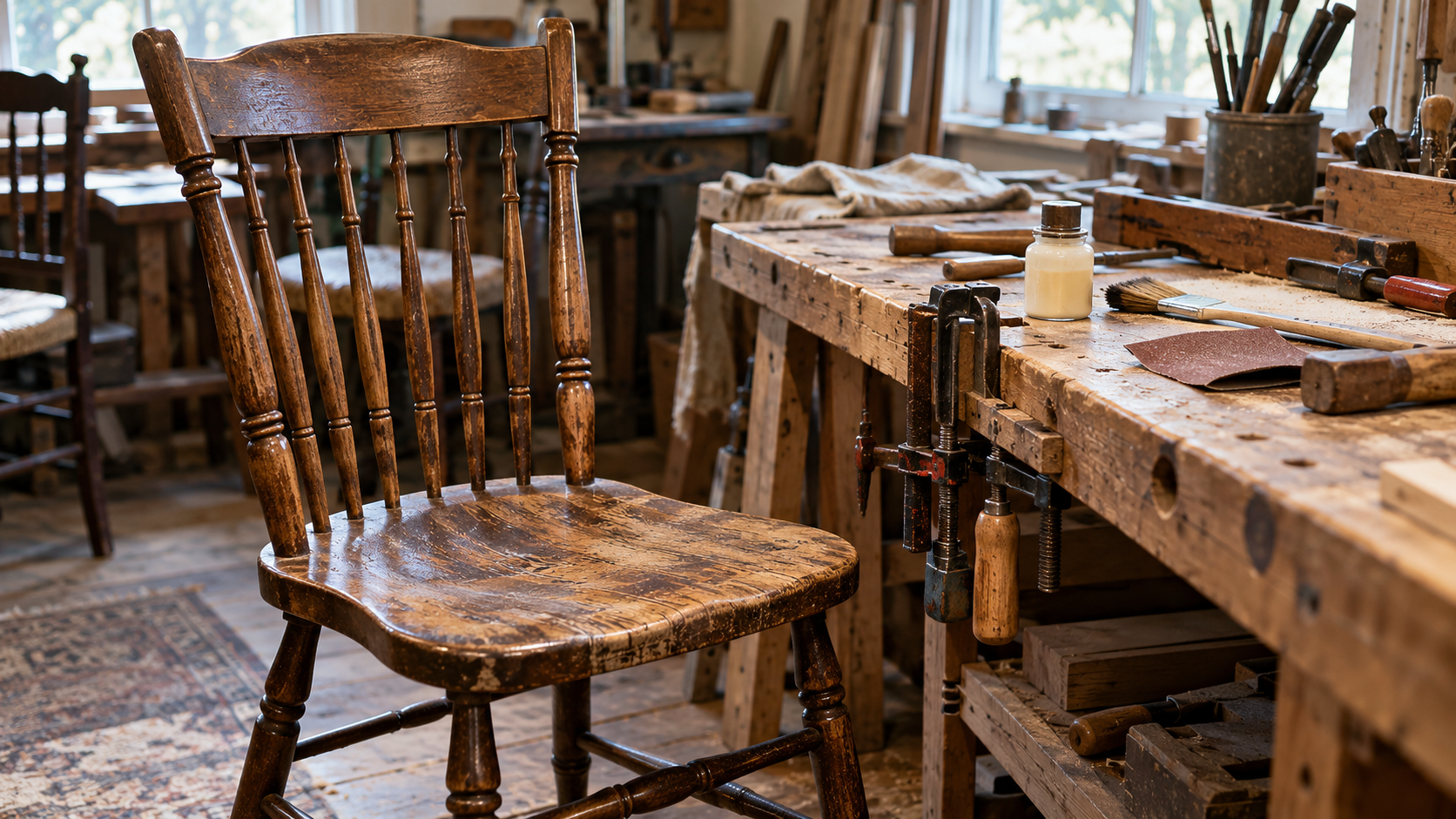

The Chair Worth Repairing
An Oregon restoration business opens a larger conversation about craftsmanship, family objects and choosing what deserves a place in the next home.
THE PACIFIC44 JOURNAL · THE JOURNEY TO 60 AND BEYOND
By The Pacific44 Journal · Editorial Features
An Oregon restoration business opens a larger conversation about craftsmanship, family objects and choosing what deserves a place in the next home.
A chair can carry more history than the room it stands in. It may have belonged to a parent, accompanied several moves or simply been the place where someone read each morning. When the joint loosens or the fabric wears through, the decision to repair it becomes more than a comparison of prices.
That is a useful subject for the Journey to 60 and Beyond. Many readers are beginning to reconsider what they own, what they want to care for and which objects deserve to remain part of daily life. A smaller home can make those questions particularly clear.
Freshwater's Furniture Restoration in Creswell, Oregon, provides a concrete entry into the conversation. Its published services put structural repair, finishing, upholstery and other crafts in the same business. An old piece may need several kinds of attention before it is ready for another chapter.
The maker's skill has its own history
The business's profile traces John's furniture work to 1973 and identifies fire and water restoration work from 1992. The current shop listing gives its address as 110 South Mill Street in Creswell, serving the Eugene–Springfield region and surrounding communities.
That history interests Pacific44 because restoration is work built through repeated observation. Each object arrives with a different combination of material, construction, condition and use. A familiar category such as dining chair can still contain a very particular problem.
The services page includes repair, refinishing, antique restoration, upholstery, cane weaving, wood carving and leather or fabric care. Those are not interchangeable treatments. The breadth invites a conversation about what the specific object needs rather than a single request to make it look new.
This is a researched profile, not a review of work commissioned by Pacific44. A prospective customer should arrange an assessment and ask about the approach appropriate to their piece.
Begin with the purpose of the object
Before seeking a quotation, consider what you want the chair to do. Will it return to everyday use, become a display piece or go to another family member? The answer can shape the discussion about appearance, comfort and treatment.
Bring its story where you can. Photographs, names, dates or an account of how it was used may explain why it matters. Label what is known and what is family recollection; an attractive story does not establish an object's age or maker.
Ask whether the construction can support the intended use and what work would be needed first. A new surface cannot answer a structural question. Let a qualified professional assess it rather than making a repair plan from a photograph alone.
For a potentially valuable antique, discuss whether conservation expertise or an appraisal is appropriate before changing the finish or other original features. The wish to improve appearance should be considered alongside historical and material significance.
Different kinds of repair, different outcomes
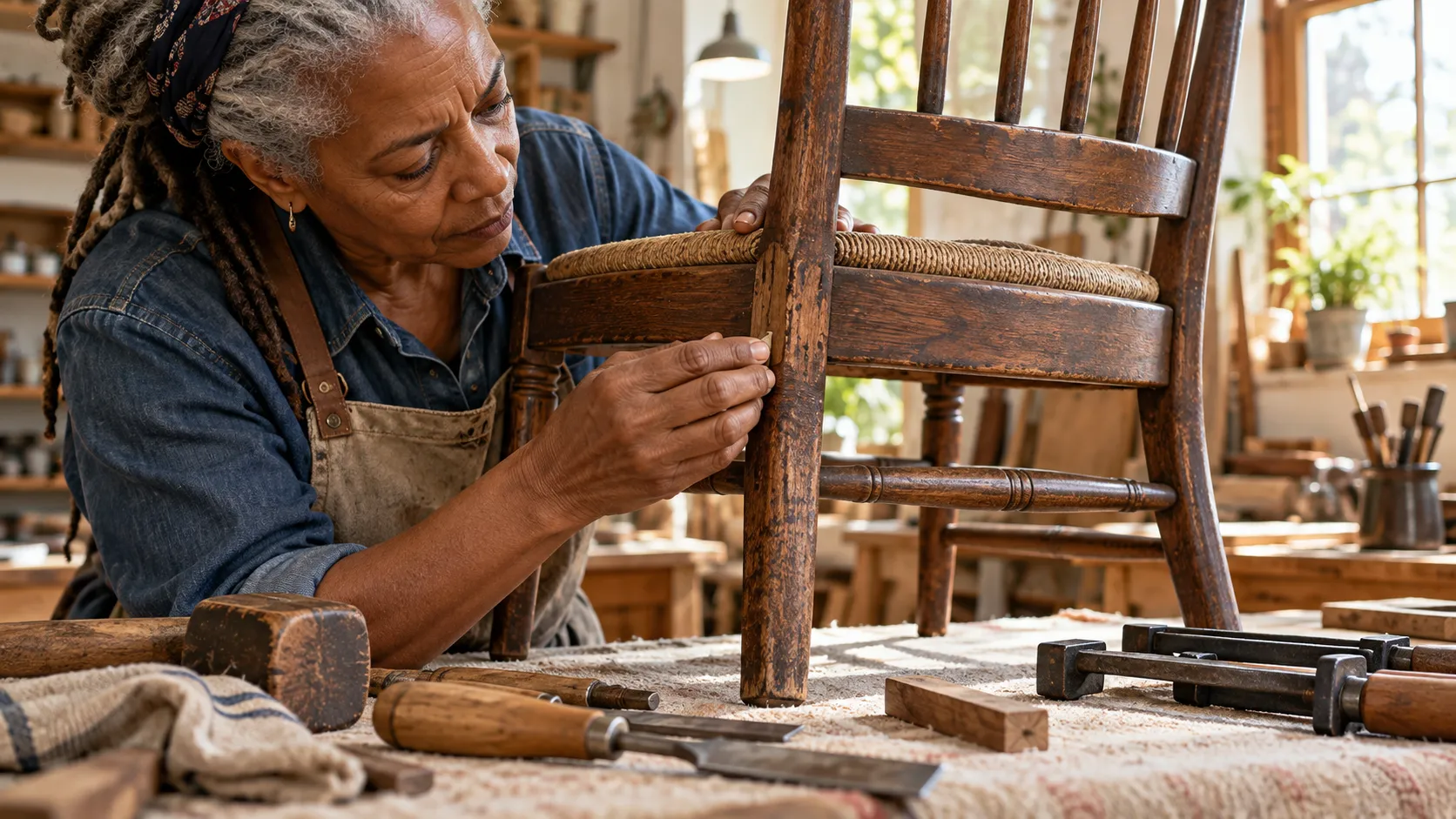
A loose chair, worn upholstery and a damaged finish present different questions. The useful consultation distinguishes them, explains what can be done and makes clear where uncertainty remains.
Ask which parts can be retained and which may need replacement. If upholstery is involved, consider fabric, padding, support and how the chair will be used. The most attractive textile in a sample book may not suit the household's daily needs.
Comfort matters as much as appearance. If possible, sit in the chair before deciding it should occupy a central place in the next home. Its sentimental history and your present comfort deserve to be considered together.
Request a clear description of the proposed work, estimated cost, timing and transport arrangements. Ask what might change after closer examination. A carefully explained quotation is part of understanding the craft, not an interruption to it.
Let a smaller home clarify the choice
Moving can turn possessions into a series of urgent decisions. An object is easier to choose thoughtfully before the week when every room contains boxes.
Measure the destination as well as the chair. Include how it will be moved through doors and where people will walk around it. A piece that worked in a larger house may need a different role in a smaller one.
Think about how often it will be used. A treasured chair could become a reading place, a seat in a bedroom or part of a modest dining arrangement. Giving it a specific purpose can help distinguish keeping an object from merely storing it.
The alternative may be passing it on. Ask whether another family member actually wants the piece and understands any care it needs. A gift should not quietly become an obligation someone else has to manage.
Preserve the story as well as the furniture
If the chair stays in the family, record the information that makes it personal. A short written account and a few photographs can do more than an uncertain claim repeated years later.
Who used it? Where did it live? What do you genuinely remember happening around it? Those ordinary details can become part of an object's value even when it has no exceptional market price.
Keep the record separate from claims about manufacture or appraisal. Personal meaning and commercial value are different things. An everyday chair can be worth repairing to its owner without becoming a rare antique.
After the work, photograph it again and retain the description of what was done. The treatment becomes another chapter in the object's life. Future owners may appreciate knowing which parts were retained or changed.
A western craft stop, approached appropriately
Readers traveling in the Eugene–Springfield area may find the restoration subject adds another interest to a regional visit. A working shop is not automatically a public attraction, however. Arrange any consultation or visit directly.
If bringing furniture is part of the trip, discuss transport before making plans. A holiday vehicle and an improvised wrapping arrangement may not be suitable for the piece. The shop can explain what it needs to assess and how delivery should be handled.
Even without a commission, the idea of repair can alter how you look at homes, antique shops and makers. You begin noticing joints, wear and the decisions that helped an object survive. Familiar furniture becomes more legible.
For Pacific44, that is the cultural interest: skill made visible through something ordinary enough to use every day.
Choose what deserves to remain
A next chapter does not require a completely new set of surroundings. Nor does it require retaining everything because it once mattered. There is room for selection based on use, affection and an honest assessment of care.
The chair worth repairing is the one whose place in your life has become clear. Sometimes the answer is a professional treatment. Sometimes it is another family member, a different room or a decision to let it go.
The Journey to 60 and Beyond includes learning that distinction. A well-chosen repair can give craftsmanship, memory and comfort another span of years.
When the work is finished, the most satisfying result may be ordinary: a chair you can sit in again, with its story still present in the room.
Sources & planning
Freshwater's profile · Restoration services
Researched Pacific44 magazine feature; no firsthand visit, interview or product review is implied. The opening image is an AI-generated editorial illustration, not a photograph of the named business or destination. Information checked October 12, 2026; confirm current arrangements directly.
Image
Gallery.


Join the Journey!
Stories, places, music, ideas & inspiration for the journey to 60 and beyond — delivered from Pacific44.

Explore
Related posts.

Follow the
Journey.
@pacific44_lifestyle