

Sunday Sessions: October London — Mulholland Drive: A Little Room to Get Away
October London’s modern soul, the Marvin Gaye influence, Hollywood’s historic hillside road and our drives back toward Newport and up Pacific Coast Highway.
Some songs make me want to get in the car. October London’s “Mulholland Drive” is one of them.
I hear it and think about our drives back toward Newport, or a classic drive up Pacific Coast Highway with music like this playing. The road becomes part of the experience. So does the person beside you. You can know where you’re going and still enjoy taking your time getting there.
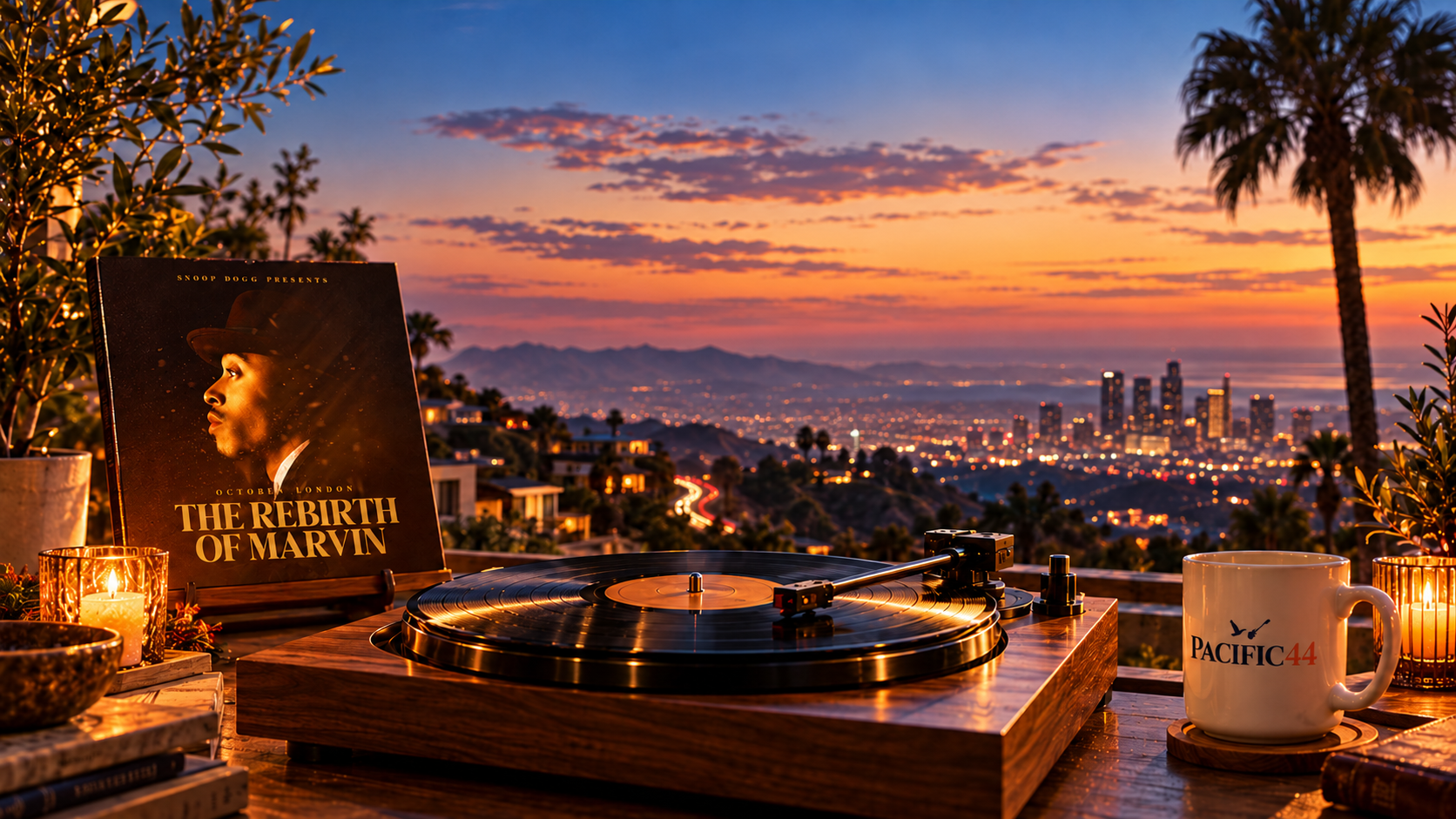
I also have The Rebirth of Marvin in my studio. It belongs in a collection that holds different chapters of my musical life, from The Church to the Eagles and plenty in between. This record brings something I love about classic soul into the life I’m living now.
That’s why I wanted to share it here. “Mulholland Drive” brings together a modern artist, a sound with deep roots and a road whose name carries an entire Los Angeles story.
A modern voice with an old soul
October London is a singer and songwriter whose connection to Marvin Gaye is easy to hear. What draws me in is the warmth of his delivery: that unhurried, intimate way of letting a song unfold. I love the modern style, and I love hearing the classic influence within it. The music feels comfortable without feeling worn out.
“Mulholland Drive,” featuring Snoop Dogg and Latoiya Williams, appears on The Rebirth of Marvin, released in February 2023 through Death Row Records. The album title makes the connection clear. But London has also spoken about wanting listeners to understand that he has his own story to tell.
In a 2023 interview with YouKnowIGotSoul, he described the Marvin comparisons as both flattering and uncomfortable: he respected Gaye too much to suggest he could take his place. In a later Notion interview, he described the project as a way to honor an enduring sound while carrying his own experiences into it.
I appreciate that. When an artist loves the music that came before him, you can hear a conversation between generations. For those of us who grew up with soul records, that familiarity gives us an entrance. Then a newer song gives us a reason to keep listening.
What I hear in “Mulholland Drive”
At the center of this song is the desire to step away from the world’s noise. Its road trip offers a little distance from the television, the negativity and the feeling of being surrounded by things that keep demanding your attention. The destination matters less than the chance to breathe.
That is my reading of it, and it fits the way I enjoy this music. I don’t need every song to give me something to solve. Sometimes I want a record that changes the atmosphere and lets the day loosen its grip a little.
There is something appealing about a song that makes quiet time feel inviting. It leaves room for another person, for a view outside the window and for a few miles when your mind can settle. On a drive, the music can become the conversation for a while.
A good song can turn the miles between places into part of the memory.
A road above the city—and a century of history
Mulholland Drive was already a Los Angeles landmark long before October London put its name into a song. Construction began in 1923, according to UCLA Library’s historical account. The road was named for William Mulholland, the engineer associated with the Los Angeles Aqueduct.
Metro’s transportation archive records its dedication on December 27, 1924, with celebrations that included a parade, a rodeo, aerial entertainment and a program at the Hollywood Bowl. The roadway then known as Mulholland Highway was renamed Mulholland Drive in 1939. That early ceremony tells you something about the ambition behind it: this was a road people were expected to experience, as well as use.
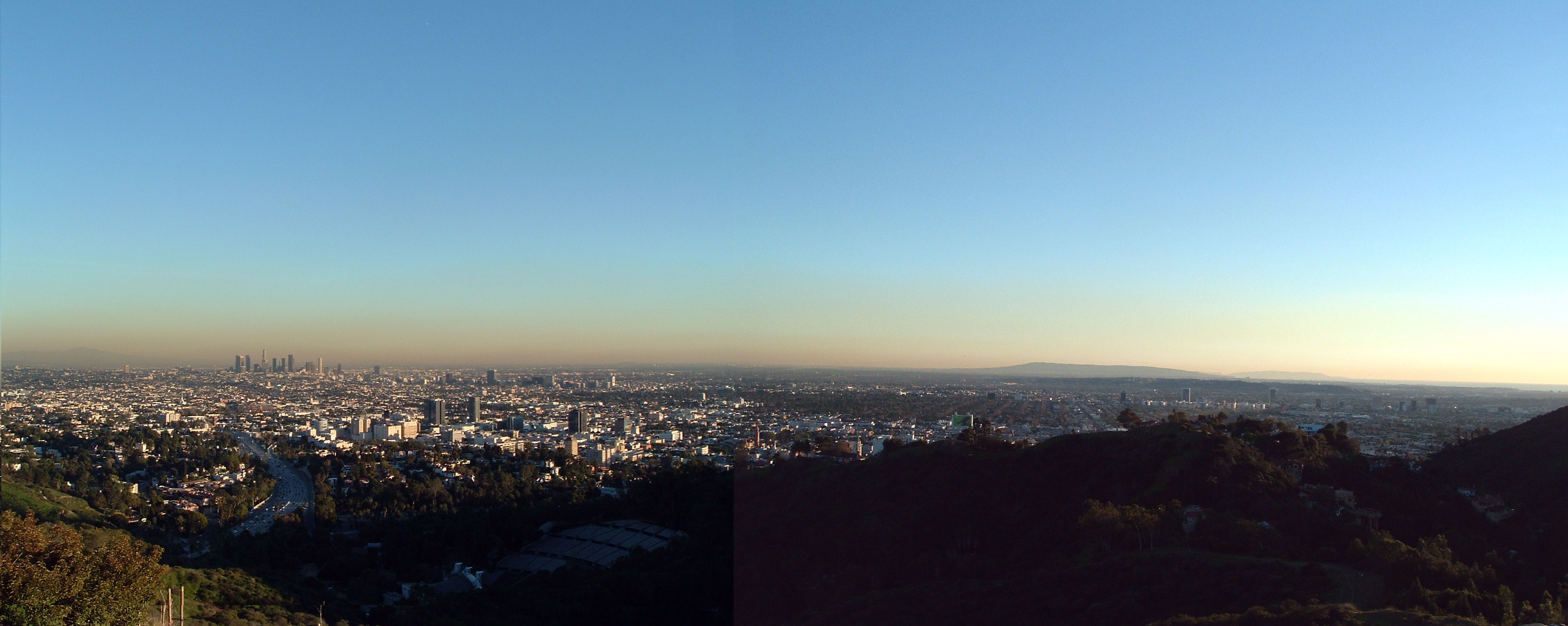
The Mountains Recreation and Conservation Authority describes the city’s roughly 24-mile Mulholland Drive as part of a larger scenic corridor intended to bring people from the city toward the mountains and beaches. Its overlooks reveal the scale of Los Angeles: hills, neighborhoods, the Valley and the basin beyond. Above the Hollywood Bowl, the view takes in the city below, with the Hollywood Sign and Griffith Observatory visible to the east.
It helps to keep the names straight. Mulholland Drive and the western Mulholland Highway belong to that broader scenic corridor, but they are not interchangeable stretches of one continuous paved drive. Parts of the corridor are unpaved. Pacific Coast Highway is a separate coastal road. What connects them in this story is the pleasure of seeing Southern California from somewhere other than a freeway.
Why the name feels like Hollywood
The road’s beginnings overlapped with the Los Angeles that was building its modern identity. The Hollywoodland sign went up in 1923, initially advertising a housing development, as UCLA Library documents. Film, real estate and the promise of a different life were becoming part of the same landscape.
From a ridge above that landscape, Hollywood can feel both close and distant. You can see the city where people come to work, create, start over and hope their ideas find an audience. The view gives those ambitions a physical setting.
The name also traveled into the movies. David Lynch’s Mulholland Dr., released in 2001, follows a Hollywood hopeful into a much darker, dreamlike Los Angeles. October London’s song takes me somewhere gentler. The road becomes a place to get a little distance from the world.
That contrast interests me. A place can carry a public mythology and still mean something personal to each of us. Hollywood has its stories. We have ours.
Back toward Newport, or farther up the coast
For me, this song reaches beyond the road in its title. It belongs with the music we enjoy on our drives back toward Newport and up Pacific Coast Highway. There is a feeling in that combination of coast, movement and soul music that I keep coming back to.
I have lived in the West since 2010, and the Pacific has become part of how I see the world. Our foundations are in the Midwest. Those roots remain. But the coast has given me another set of places and memories to carry, and music is woven through them.
You don’t have to turn every drive into an occasion. Sometimes it becomes one because you’ve given yourself a little time and put on something you love. The scenery has room to register. A song comes on that you want to hear all the way through. You begin to enjoy the stretch between where you were and where you’re headed.
That is the feeling I associate with “Mulholland Drive.” It makes me want to pay attention to the ride.

Keep discovering on The Journey to 60 and Beyond
I don’t want the soundtrack of this part of life to stop at the records I knew when I was younger. I love returning to those albums. I also want to hear what a new voice can do with a tradition I already care about.
October London gives me that kind of discovery. There is a familiar soulfulness in his music, and there is room to make a new memory with it. Having the album in my studio makes that connection tangible. Hearing it on a drive gives it another life.
On The Journey to 60 and Beyond, I want to keep making room for both: the things that have stayed with us, and the things we haven’t found yet. A record worth bringing home. A road worth learning about. Some time with someone we love.
Put “Mulholland Drive” on this Sunday. Listen to the whole song. Think about the road it brings to mind for you—and the person you would like beside you.
We still have places to go. We still have music to discover. I like the thought of enjoying both along the way.
Allen S. Robinson
Founder & Publisher | The Pacific44 Journal
The Journey to 60 and Beyond
LIVE WELL ◆ STAY CURIOUS ◆ KEEP MOVING
Explore the road behind the song: Mulholland Drive: The Road Above Los Angeles — our companion history feature, from its 1924 opening to Hollywood and the views worth preserving.
Music and history notes: Album and release information · October London’s official visualizer · London’s 2023 interview · London on his influences · UCLA Library: Los Angeles in 1923 · Metro: the 1924 dedication · MRCA: the scenic corridor and visitor information · The Criterion Collection: Lynch’s film. Musical reflections and travel memories are Allen’s personal perspective. For a visit, check current road and overlook conditions with the relevant agencies.
Image
Gallery.


Join the Journey!
Stories, places, music, ideas & inspiration for the journey to 60 and beyond — from Pacific44.

Explore
Related posts.

The Soundtrack of Our Journey
Some songs stay with us.
Others find us along the way.
Music, memories and the moments that keep the journey moving.
Explore Sunday Sounds & Smiles